1887
The first game
Notre Dame played its first football game against Michigan. The visitors won 8–0, but the new sport took root on campus.
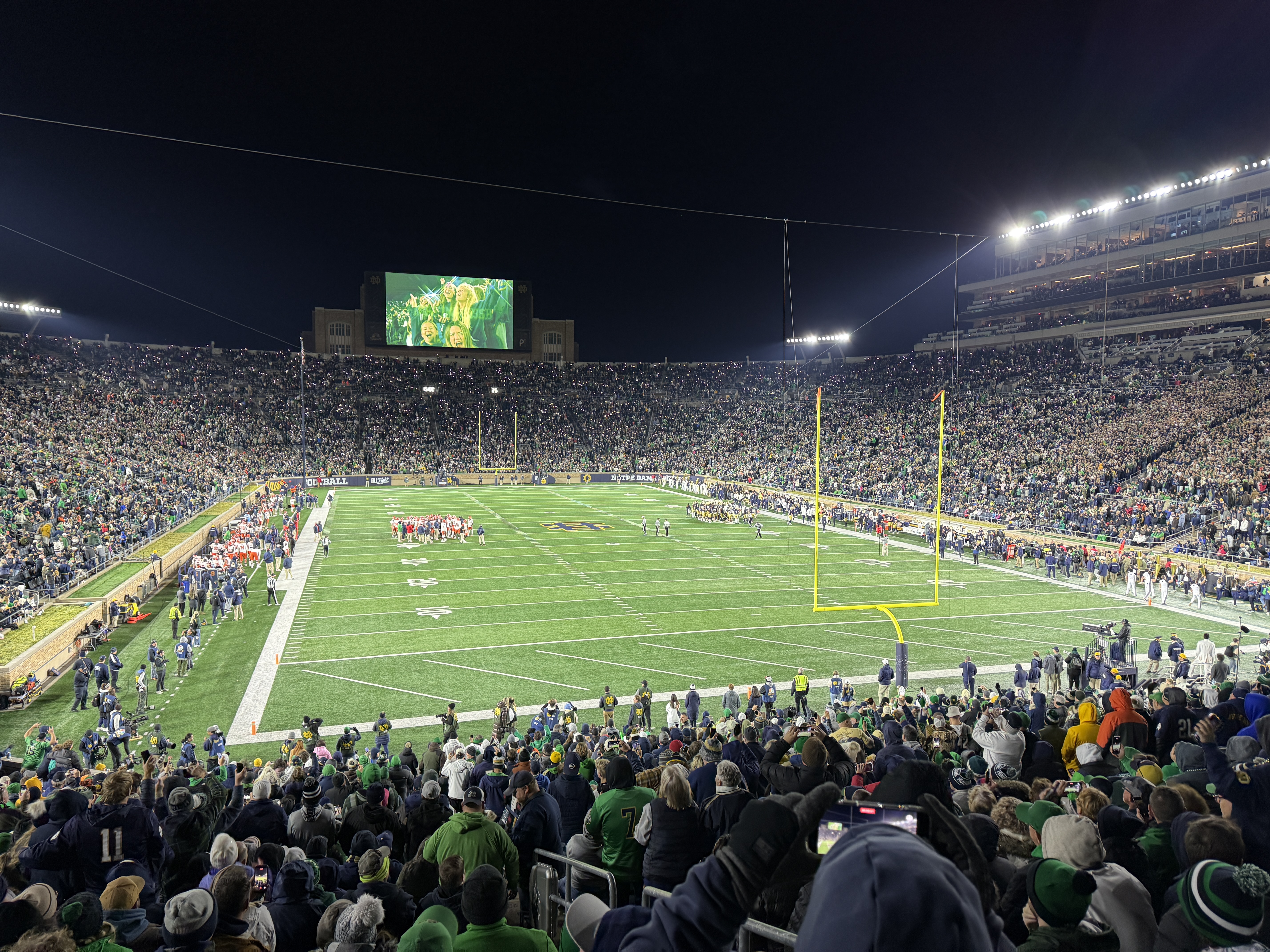
Notre Dame football grew through innovation, travel, storytelling, legendary coaches, famous players, major rivalries, and a fan community far larger than the campus itself.
Notre Dame played its first football game against Michigan. The visitors won 8–0, but the new sport took root on campus.
Quarterback Gus Dorais and end Knute Rockne used the forward pass to defeat Army at West Point, helping bring national attention to Notre Dame and to a more modern style of football.
Rockne became head coach in 1918 and won 105 games across 13 seasons. His teams, promotion, national schedules, and remarkable winning percentage helped turn a small Midwestern Catholic university into a football power.
After Notre Dame defeated Army at the Polo Grounds, sportswriter Grantland Rice’s celebrated account transformed the backfield of Stuhldreher, Miller, Crowley, and Layden into enduring sports mythology.
University president Rev. Matthew Walsh, C.S.C., formally expressed approval of “Fighting Irish,” a name that had evolved from insult and stereotype into an ideal of perseverance and pride.
Notre Dame Stadium opened as the program’s permanent home. Its tunnel, bowl, student section, band, and surrounding campus would become inseparable from the gameday experience.
Frank Leahy, Ara Parseghian, Dan Devine, and Lou Holtz led teams that added new chapters to Notre Dame’s championship history, producing generations of All-Americans, award winners, and iconic games.
Independent scheduling, landmark rivalries, national broadcasts, bowl games, and generations of “subway alumni” have kept Notre Dame football unusually national in identity. Home weekends still connect that far-flung family back to campus.
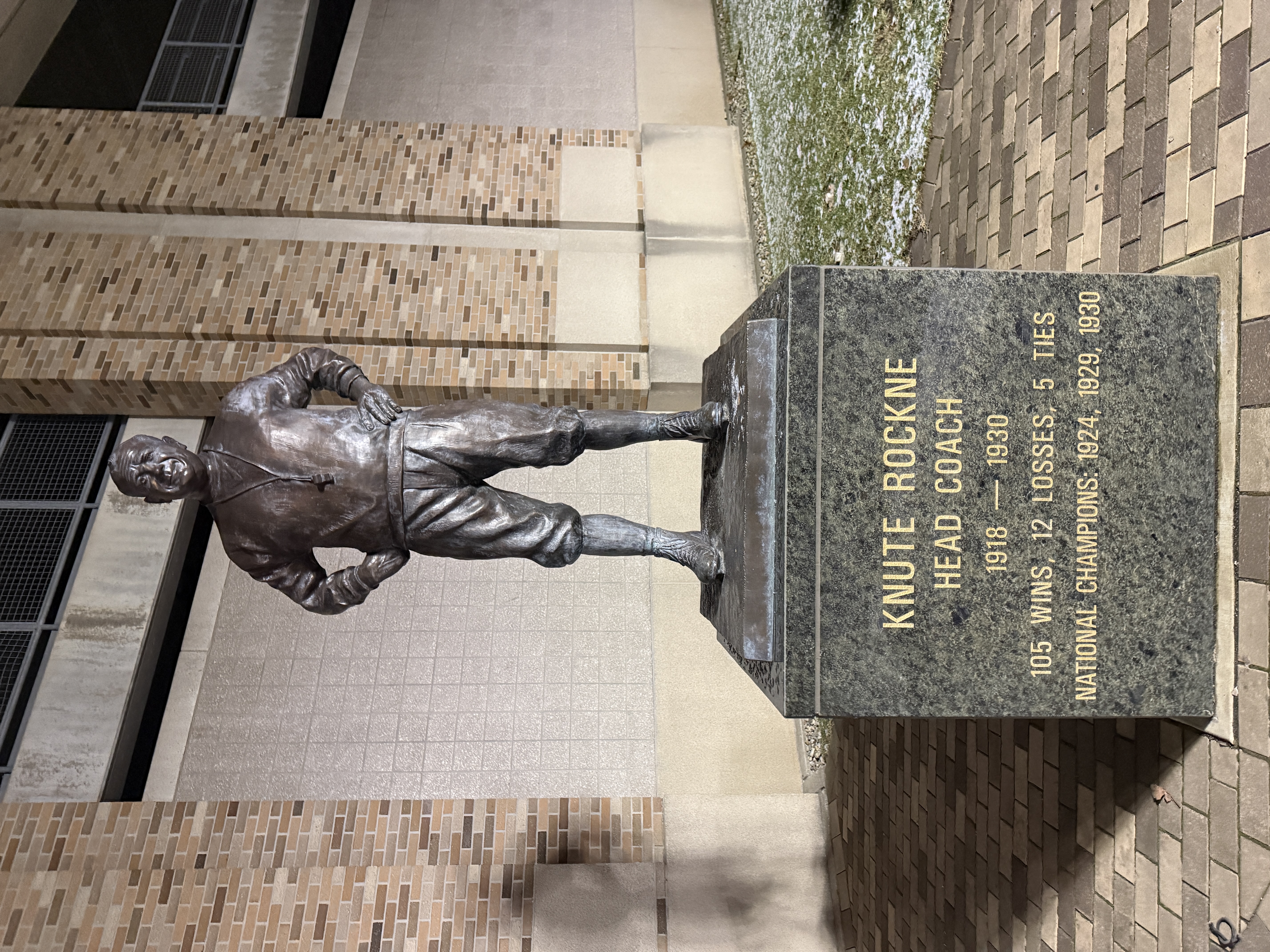
From the stadium itself to the language of preparation and belief, Knute Rockne remains central to how visitors understand the program’s rise.
History is not only a list of seasons. The 1988 Miami game reached one high school student far from campus, inspired him to work toward Notre Dame, and changed the life that followed. That is how a national story becomes a personal one.Matt’s perspective