

The standard returns
Holtz takes over a struggling program. His first team finishes 5–6, but the Irish become markedly more competitive and the direction of the program changes quickly.
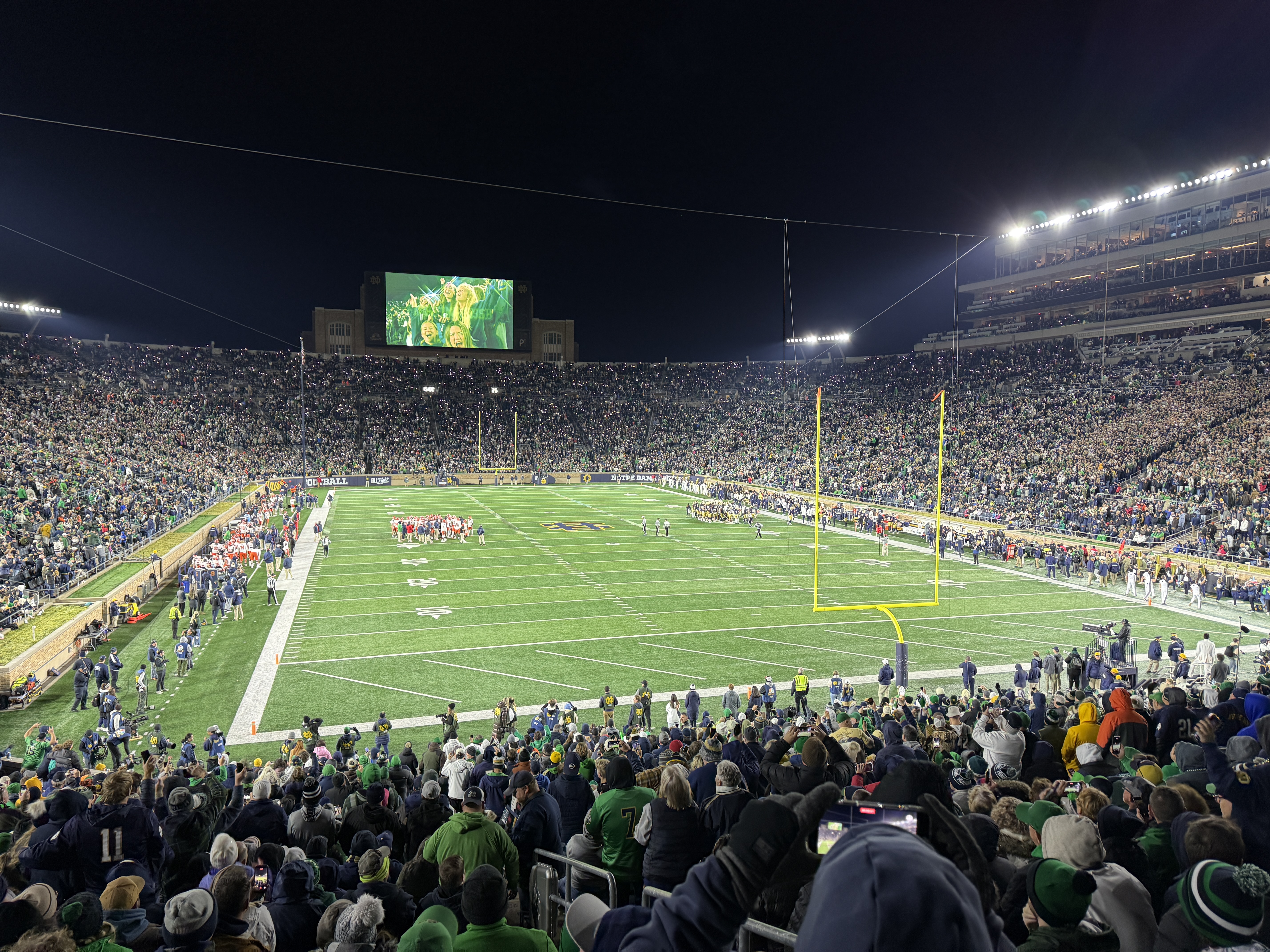
He restored Notre Dame to the summit of college football—and challenged generations of players to expect more from themselves.
“To those who know Notre Dame, no explanation is necessary. Those who don’t, no explanation will suffice.”
Coach Holtz captured what alumni and longtime fans feel but struggle to put into words. For everyone who does not know Notre Dame yet, the answer is not a longer explanation. It is an invitation to come, listen, walk the campus, and experience it for yourself.
Begin your Notre Dame visit →Lou Holtz died on March 4, 2026, at age 89. He led Notre Dame from 1986 through 1996, won 100 games, and guided the undefeated 1988 team to the national championship.
His Notre Dame legacy extends beyond results. Players, colleagues, and University leaders remembered his demanding standards, deep faith, humor, and conviction that people could become more than they believed possible. Current head coach Marcus Freeman described the foundation of Holtz’s approach in three words: love, trust, and commitment.
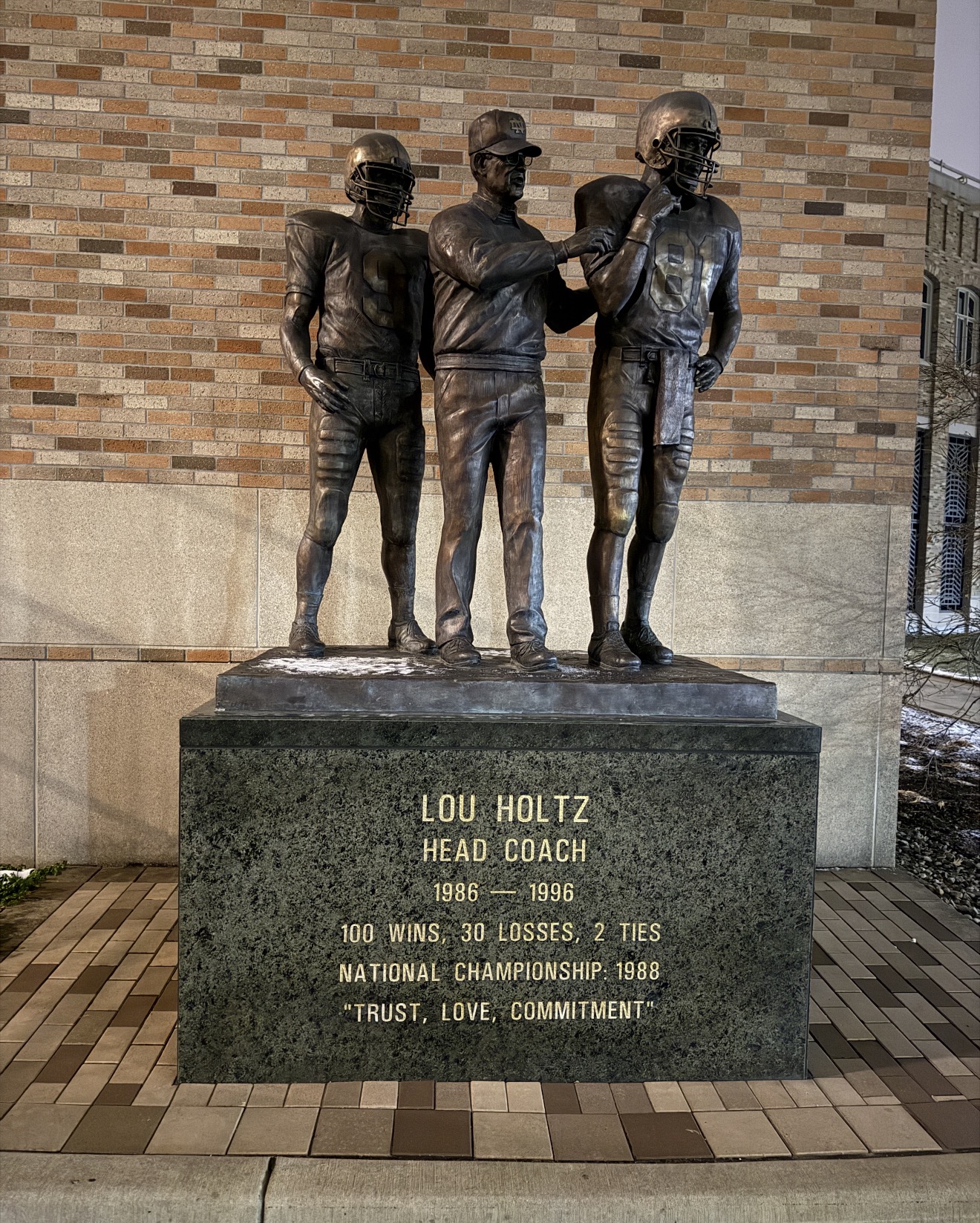
From the championship stage to the campus monument that greets today’s visitors, these images connect the man, the team, and the memories.
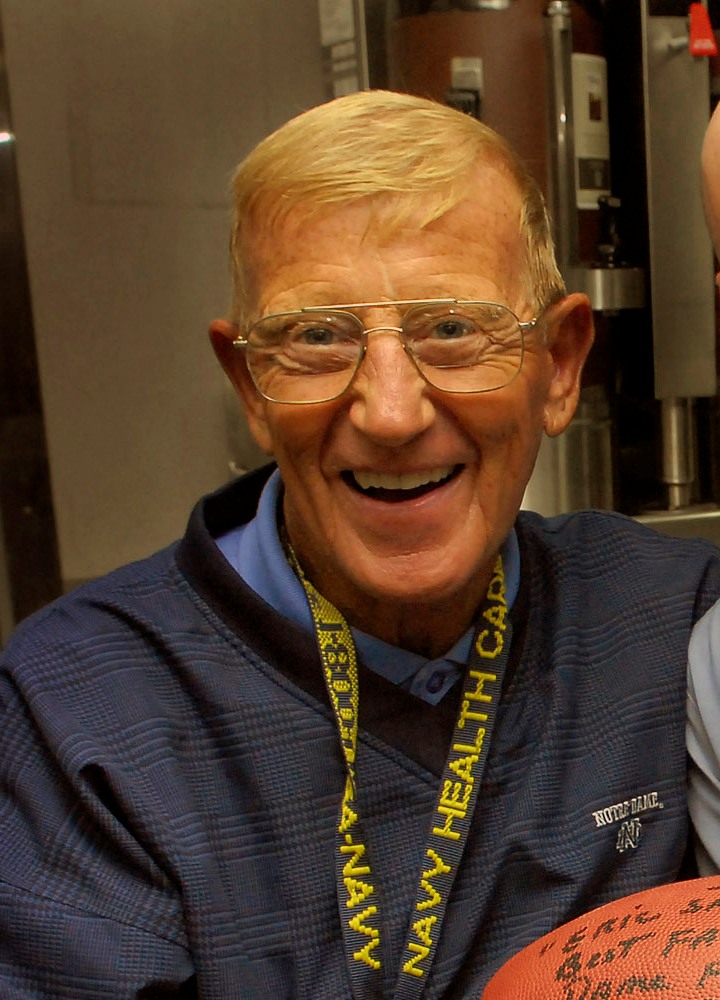
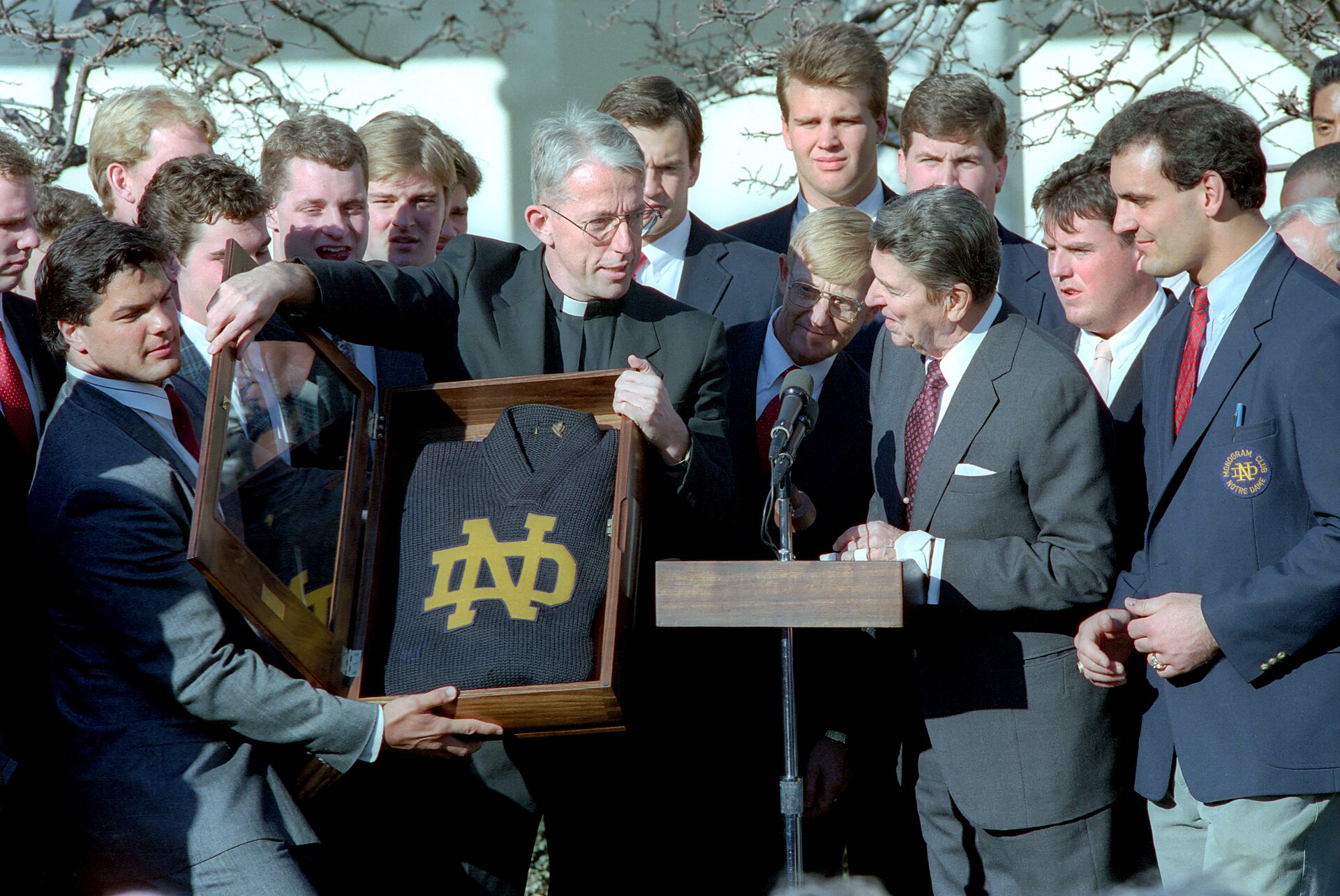
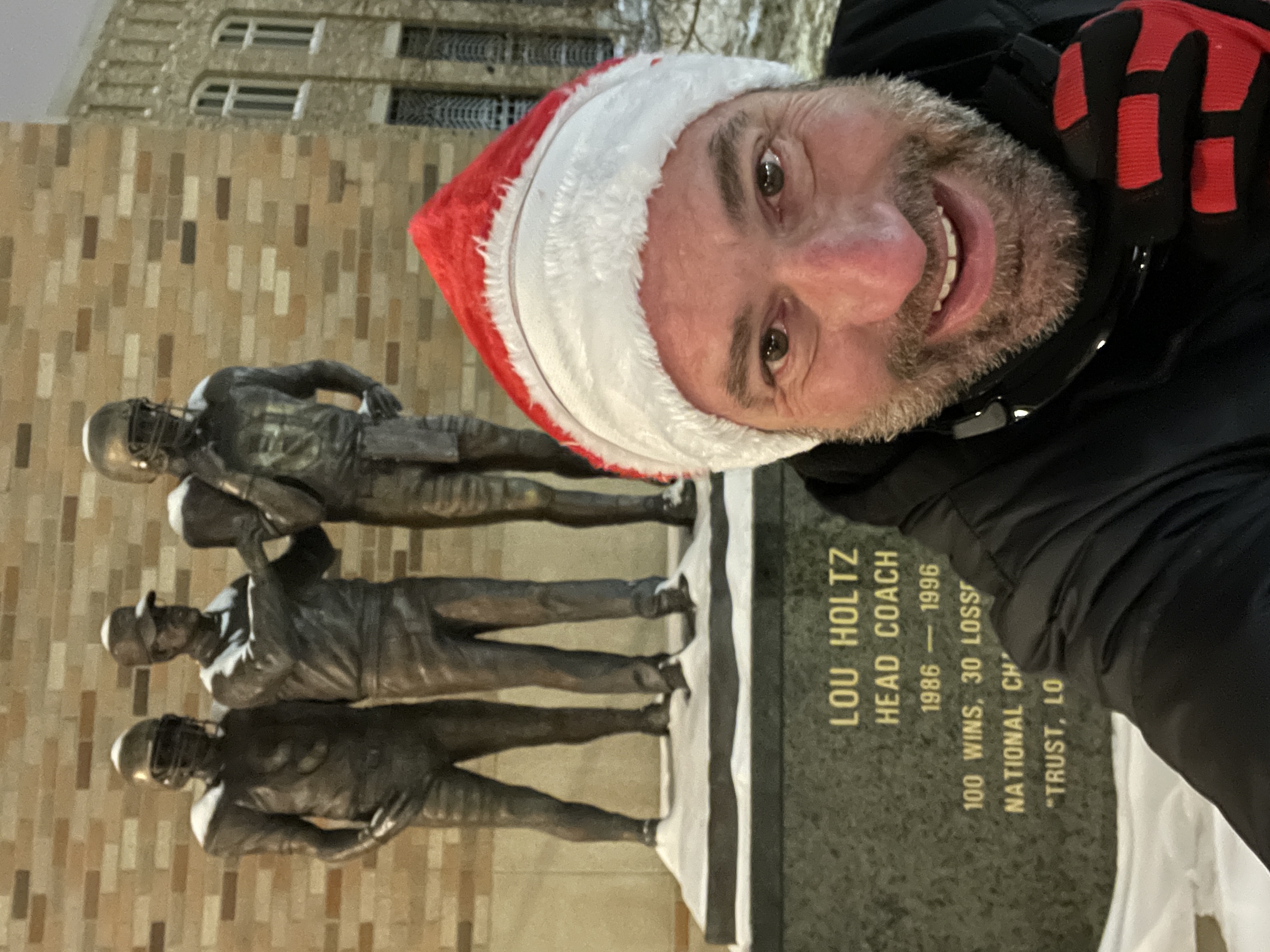
Portrait: U.S. Navy photo by Mass Communication Specialist 2nd Class Jordon Beesley, public domain, via Wikimedia Commons ↗. White House photograph: Reagan White House Photographic Collection, public domain, via Wikimedia Commons ↗. Monument photograph: Matthew Owen.
A growing collection of coaching images, tributes, and campus touchstones that keep his voice and standard close to the Notre Dame family.
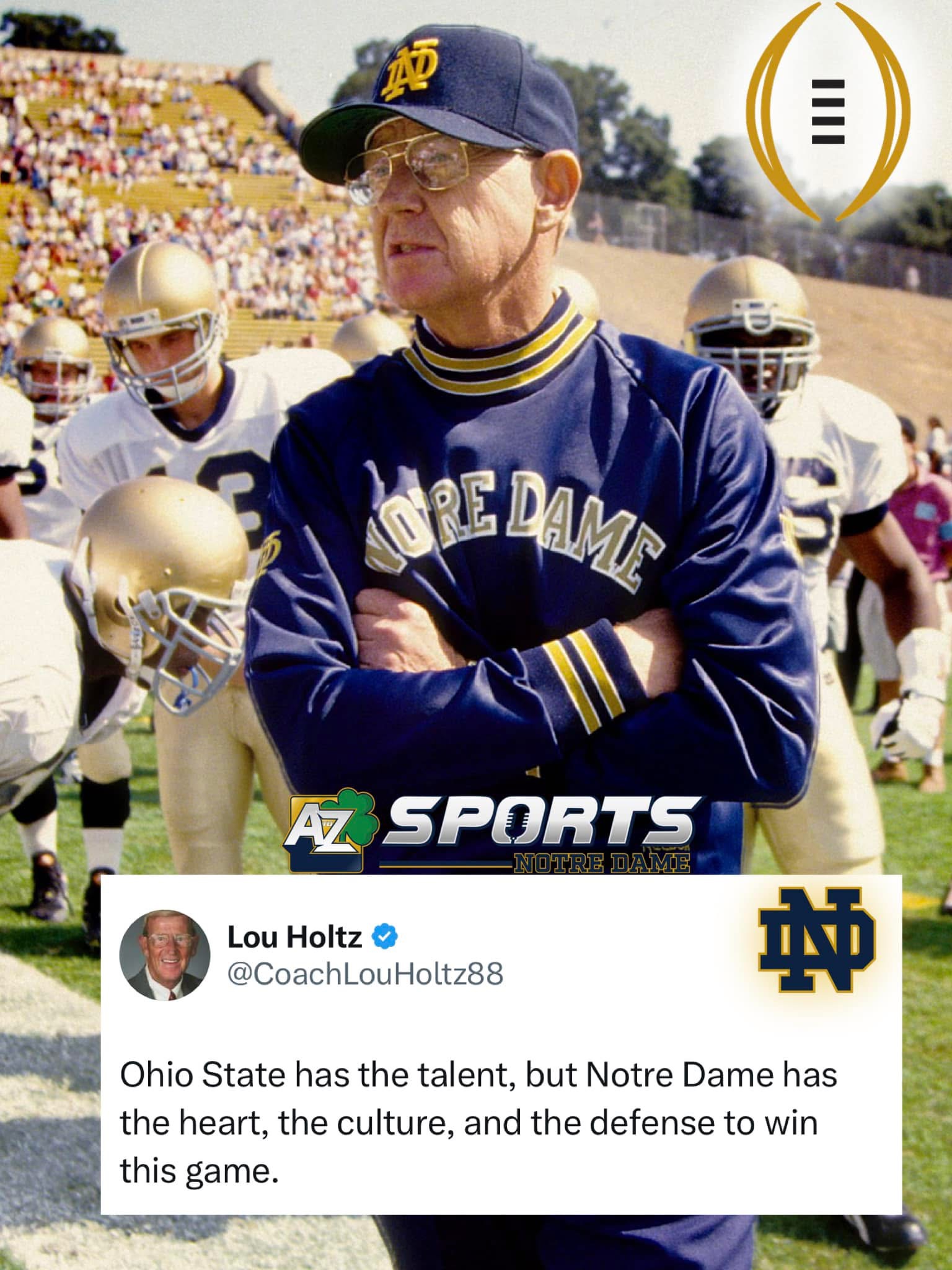
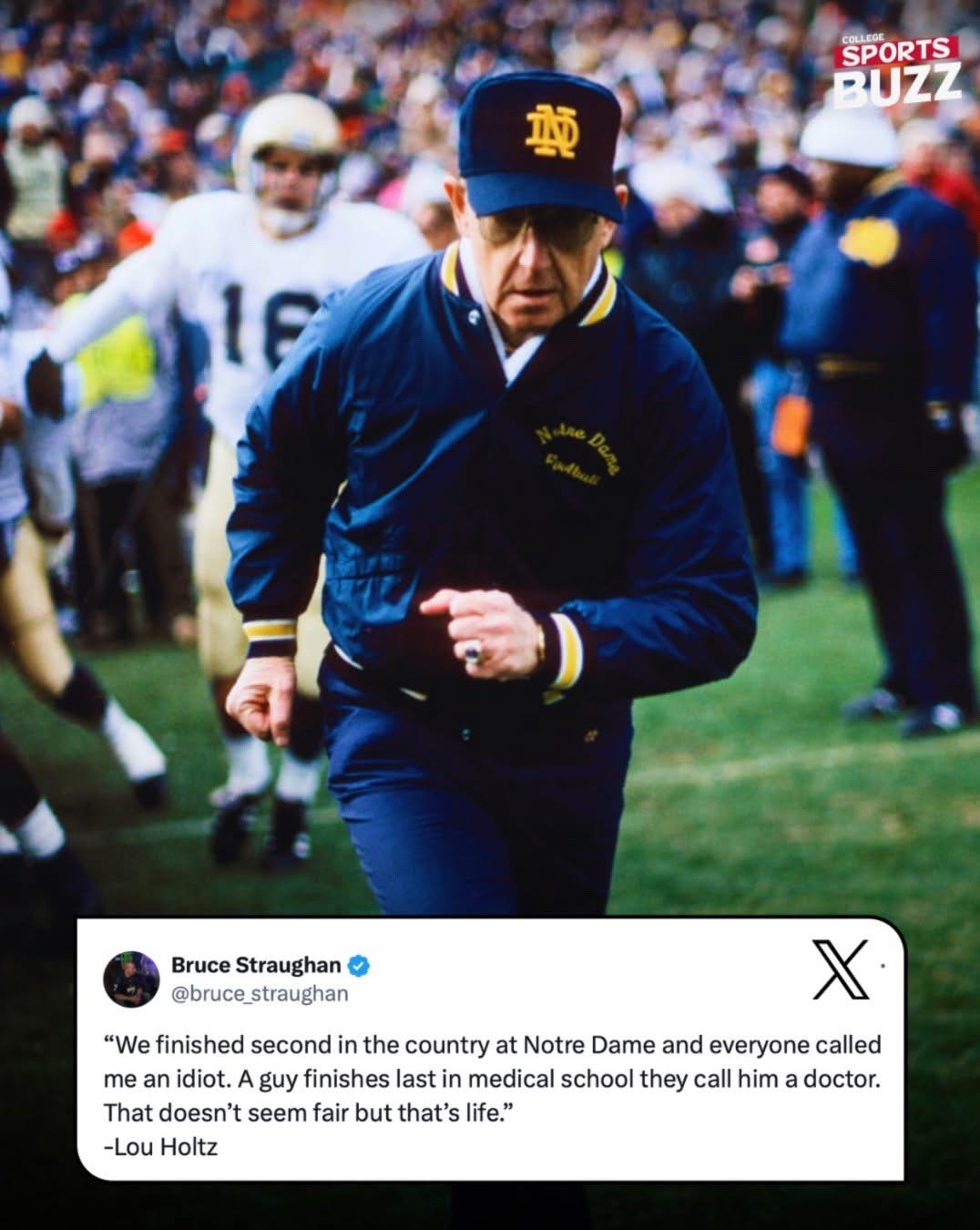
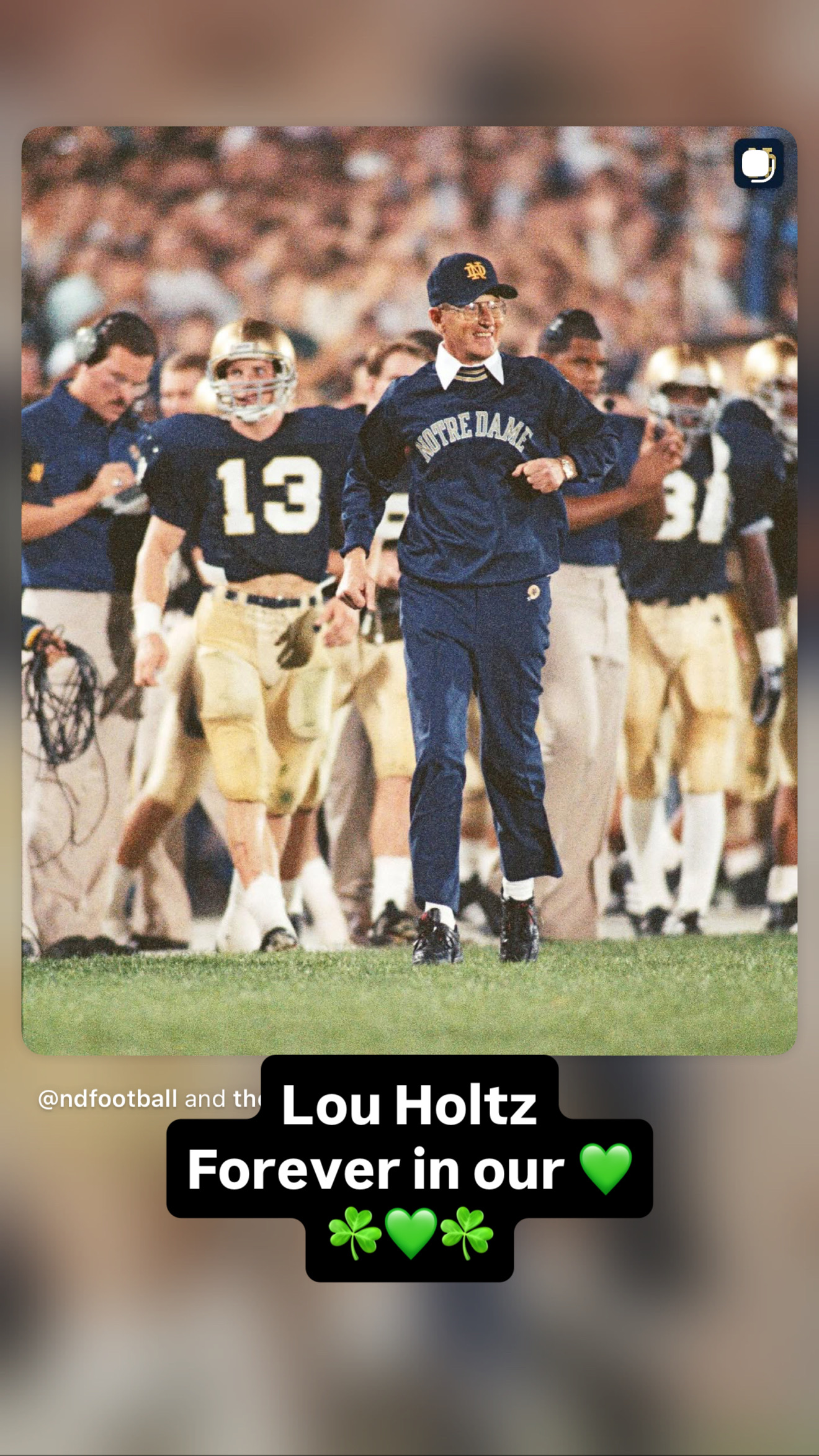
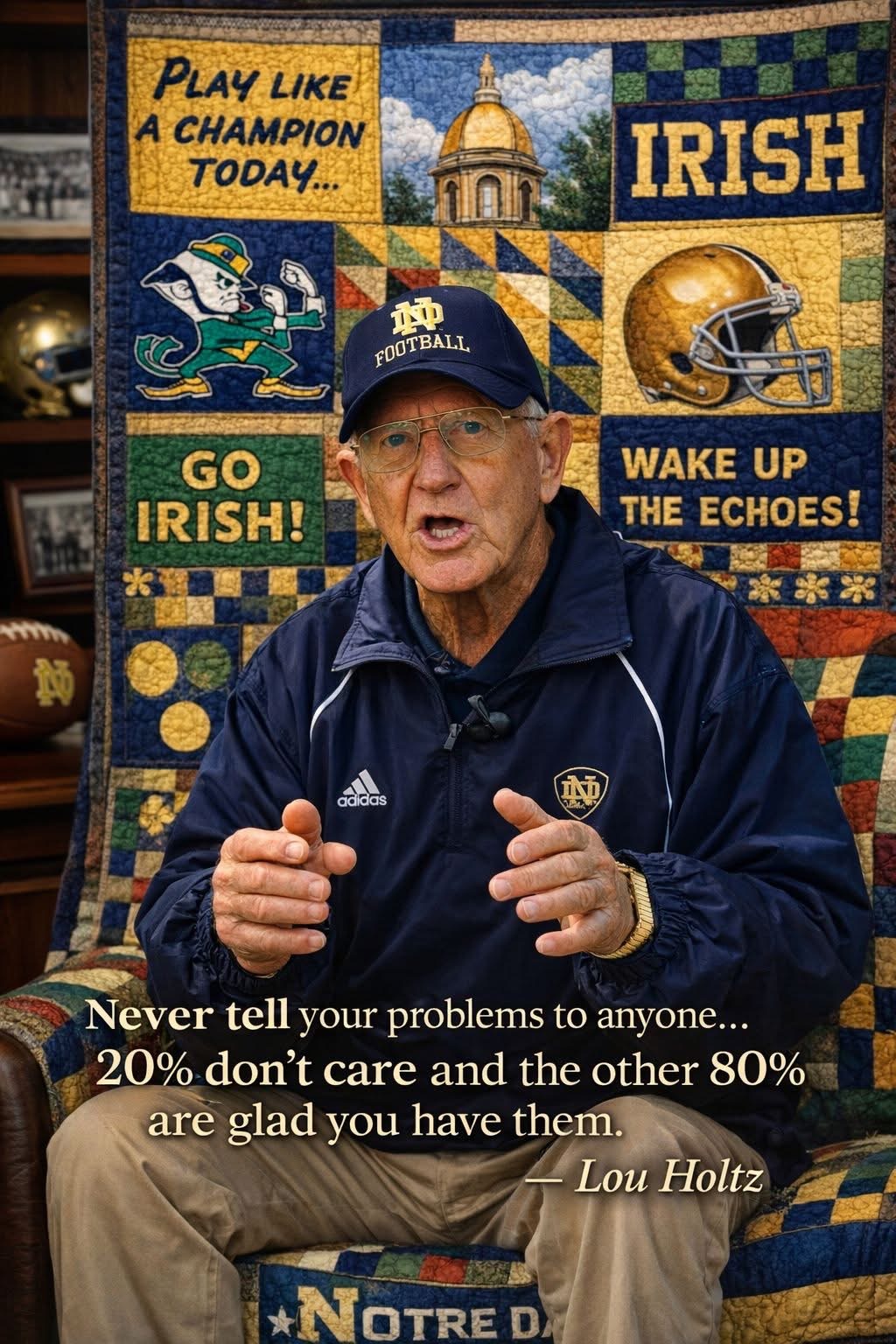
Personal archive selections provided by Matthew Owen. Select any image to open the full-resolution file.
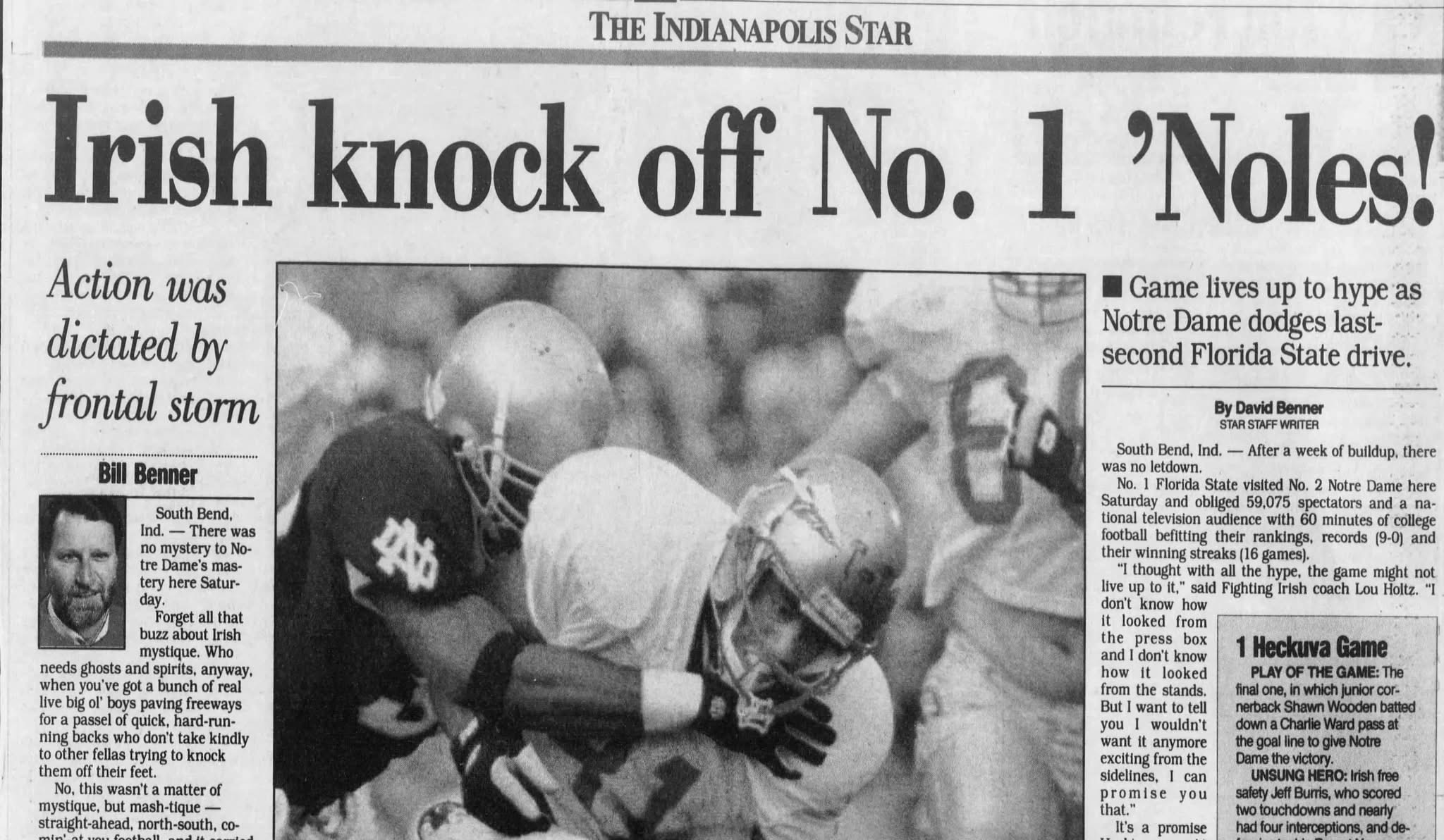
I was a high school student when his Notre Dame team defeated No. 1 Miami. That afternoon gave me a reason to believe Notre Dame could become part of my own story.
I worked harder in school because I wanted to attend the University. I was admitted, studied a STEM field at Notre Dame in the early 1990s, and built a career in technology. The friendships, values, and Notre Dame family that followed have shaped every chapter since.
This guide is dedicated to helping other people find their beginning at Notre Dame. In the 2026 season, it is also my thank-you to Lou Holtz—for the standard he set, the team that captured my attention, and the life he unknowingly helped change forever.
Eleven seasons that restored Notre Dame as a national power and produced games still retold on campus.
Holtz takes over a struggling program. His first team finishes 5–6, but the Irish become markedly more competitive and the direction of the program changes quickly.
Fourth-ranked Notre Dame survives the defending champions 31–30 in a fierce stadium classic, then keeps winning.
No. 1 Notre Dame wins 27–10 at the Coliseum, completing an undefeated regular season against another unbeaten national contender.
The Irish defeat West Virginia 34–21 in the Fiesta Bowl to finish 12–0 and claim Notre Dame’s 11th consensus national championship.
The Snow Bowl ends with a daring two-point conversion against Penn State. One year later, Notre Dame defeats No. 1 Florida State 31–24 in the “Game of the Century.”
Holtz closes his Notre Dame tenure with 100 wins and a place alongside the program’s defining coaches.
No specific season events are listed here until confirmed by the University or Notre Dame Athletics. Check back as gameday plans are released.
The Holtz statue stands near the southwest corner of Notre Dame Stadium beside the gate bearing his name. Visitors gathered there with flowers and candles after his death.
Notre Dame’s memorial coverage includes reflections from family, University leaders, former players, and coaches, along with the March 16 funeral at the Basilica.
Holtz’s lasting place at Notre Dame is tied to the culture he built as much as the championship he won.
Holtz built teams around preparation, shared responsibility, and the expectation that every person could improve.
His Catholic faith shaped his daily life, while Lou and Beth Holtz remained deeply connected to Notre Dame and its people.
His statue, stadium gate, championship memories, and generations of former players keep the Holtz era present for today’s visitors.