The collision before kickoff
The programs' simmering hostility became physical in the tunnel. Holtz used the moment to demand composure—and to focus every ounce of emotion on the game.
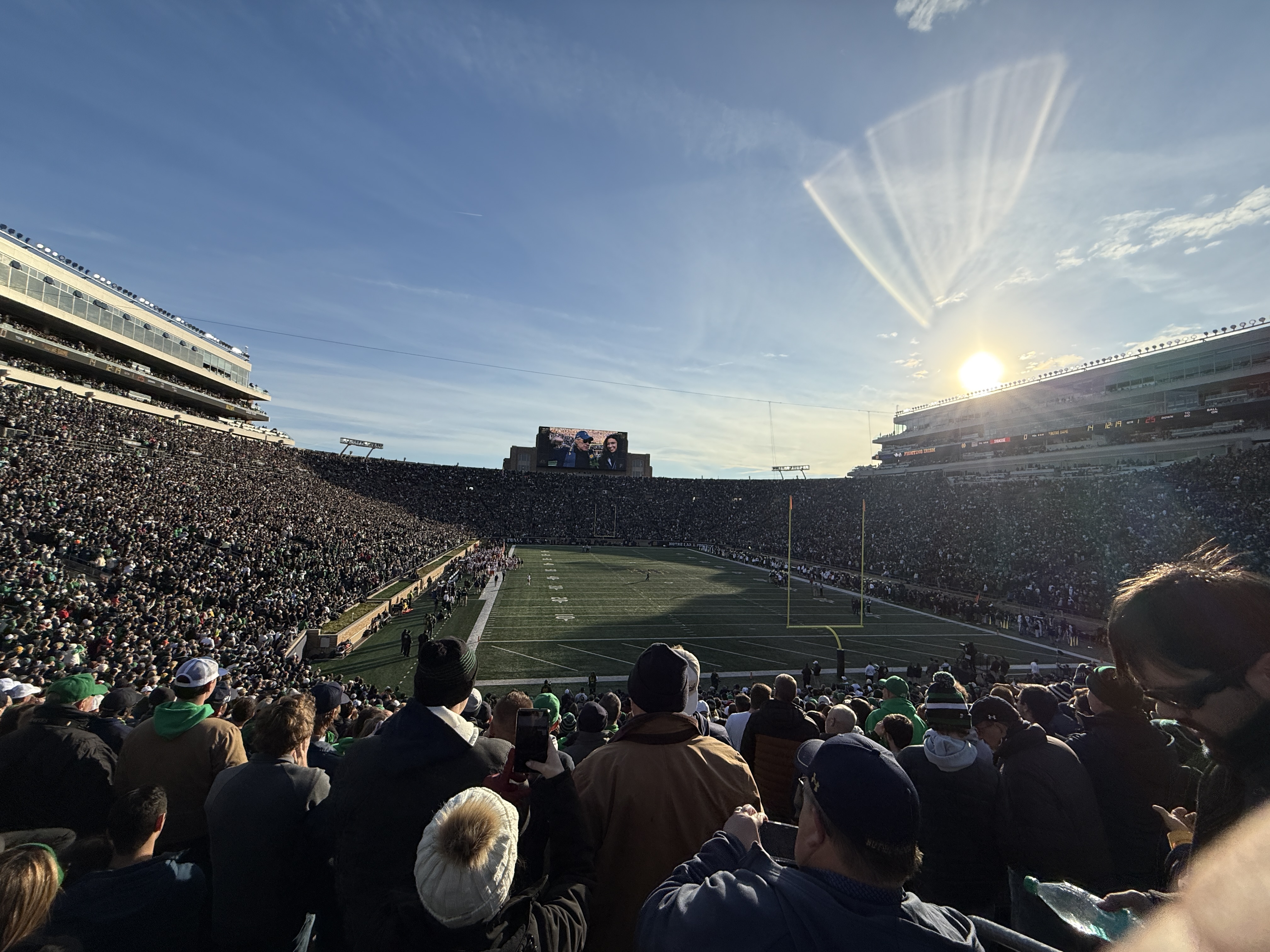
For Matt, this is more than a rivalry game. Notre Dame's 31–30 victory over No. 1 Miami—and Lou Holtz's belief in his team—became the beginning of a life at Notre Dame.
Countdown loading.
Kickoff time verified August 15, 2026. Always confirm against the official schedule.
Notre Dame originally valued Miami as a late-season trip to warm weather. By the 1980s, the Hurricanes had become a national power, and the series had transformed into something volatile.
The teams brought elite talent, contrasting public identities, championship ambitions and genuine animosity. The 1988 meeting became one of the defining games in college football history. The 2026 game brings Miami back to the same stadium, on a November night, in a season devoted here to remembering Lou Holtz.
This page is designed as a pregame primer: understand the moment that made the rivalry famous, hear the people who lived it, then build a 2026 visit that becomes part of your own story.
A scuffle erupted in the tunnel before kickoff. Holtz brought his team back into the locker room and reminded the players that Notre Dame expected class and discipline. Then, with the room listening, the message took its unforgettable turn.
“You have an afternoon to play, a lifetime to remember.”
And then: “Save Jimmy Johnson for me.”
The final line above uses the familiar clean retelling. Read the full account in Notre Dame's official locker-room story ↗ and The Perfect Storm ↗.
The afternoon had controversy, momentum swings and a final decision that left no room for a tie.
The programs' simmering hostility became physical in the tunnel. Holtz used the moment to demand composure—and to focus every ounce of emotion on the game.
Miami arrived as the defending national champion with a 36-game regular-season winning streak. Notre Dame refused to be intimidated and built a 14-point first-half advantage.
The lead moved, the pressure climbed, and a fourth-quarter Cleveland Gary fumble ruling became one of the enduring arguments surrounding the game.
Miami scored with less than a minute remaining to make it 31–30. With no overtime in college football, Jimmy Johnson chose a two-point conversion and the win.
Terrell broke up Steve Walsh's pass in the end zone. Notre Dame survived, then completed a 12–0 season and won the national championship.
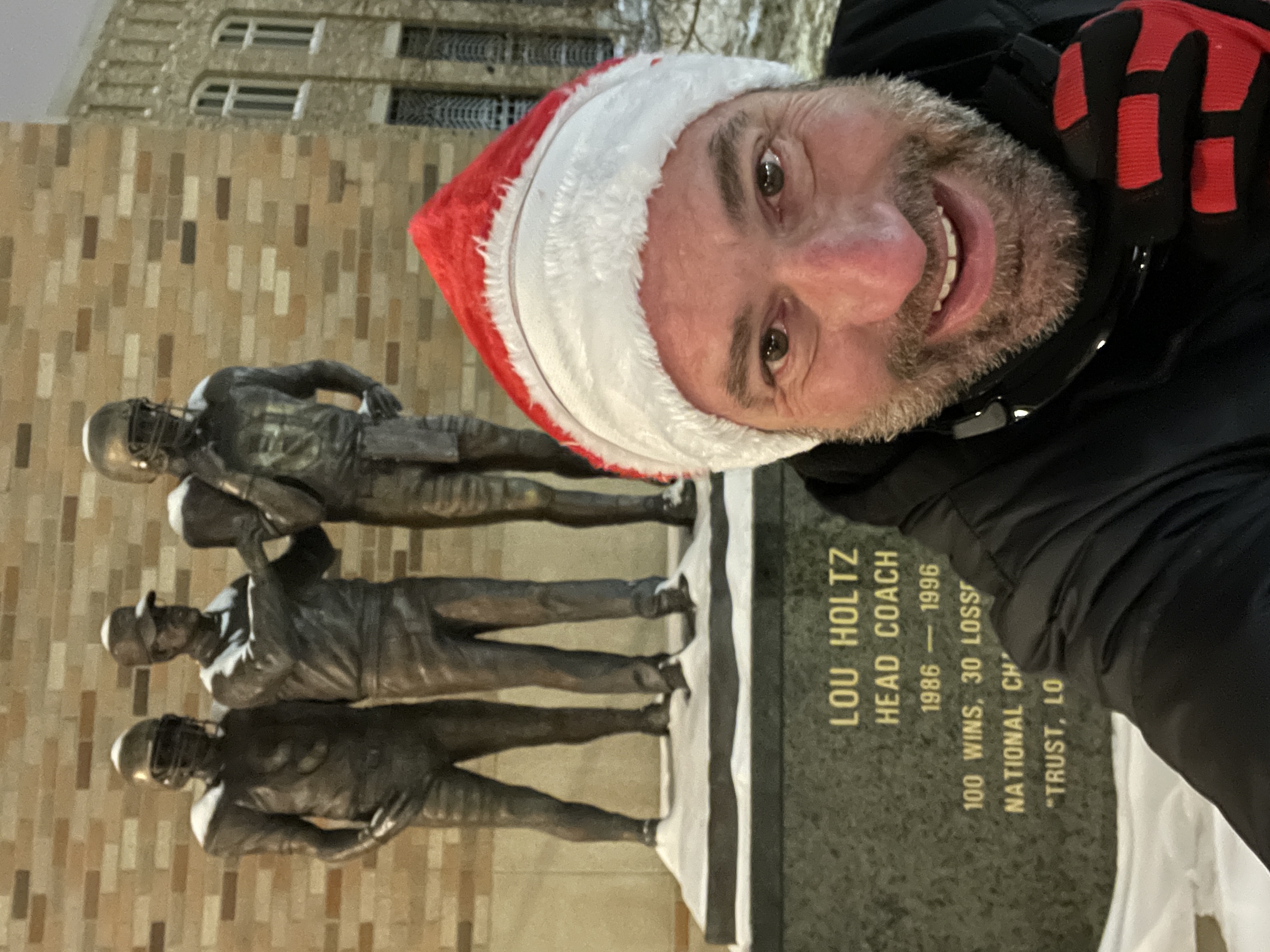
I watched the 1988 game as a high school student. The football got my attention. Lou Holtz's team gave me a reason to work.
I wanted the chance to attend Notre Dame, so I worked harder in school. A few years later, I arrived on campus as a STEM student. That education led to a career in technology, largely in the Chicago area, while my love for the Notre Dame family and football program only grew.
The 2026 Miami game closes a circle for me. It brings the opponent from that life-changing afternoon back to Notre Dame Stadium during a season in which this guide honors Coach Holtz. My hope is that a first-time visitor discovers something here that becomes the beginning of their own story.
Start with Notre Dame's official oral history of the locker-room speech, then continue through the buildup and decisive plays.
The Locker Room SpeechLou Holtz, Tony Rice, Pat Terrell and teammates remember the scene before kickoff. Official Notre Dame 125 Football video.
No. 1 Miami, No. 4 Notre Dame and a ticket everyone wanted.
Steve Belles and Lou Holtz revisit a momentum-changing fourth-down stop.
The two-point attempt, Pat Terrell's breakup and the instant the stadium exhaled.
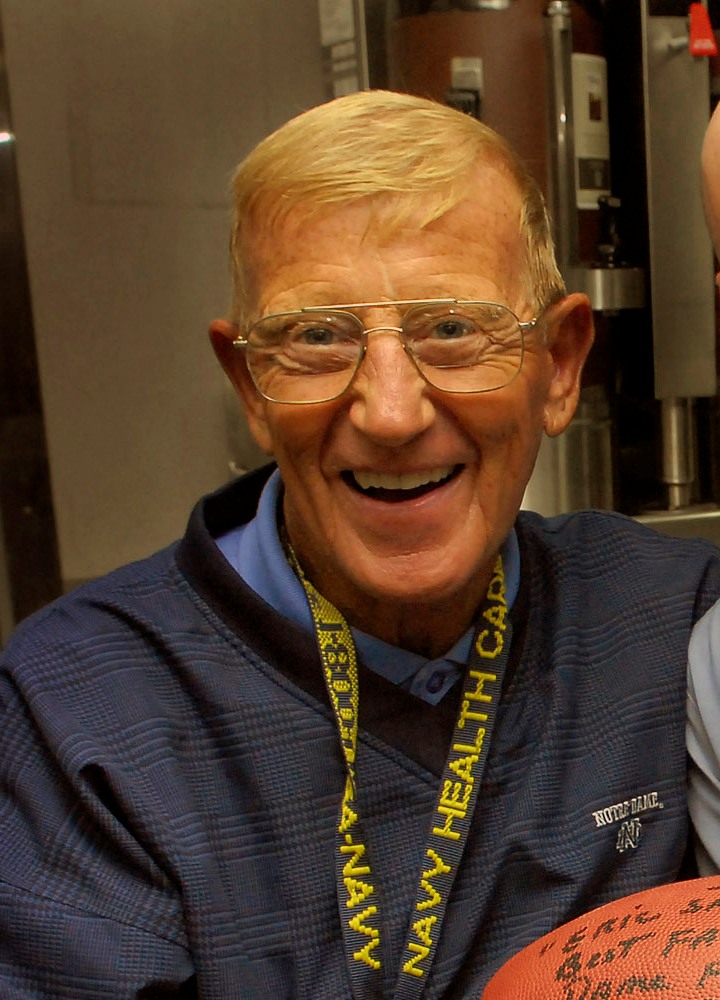
Three images connect the man who delivered the message, the team that finished the job and the life that one game changed.
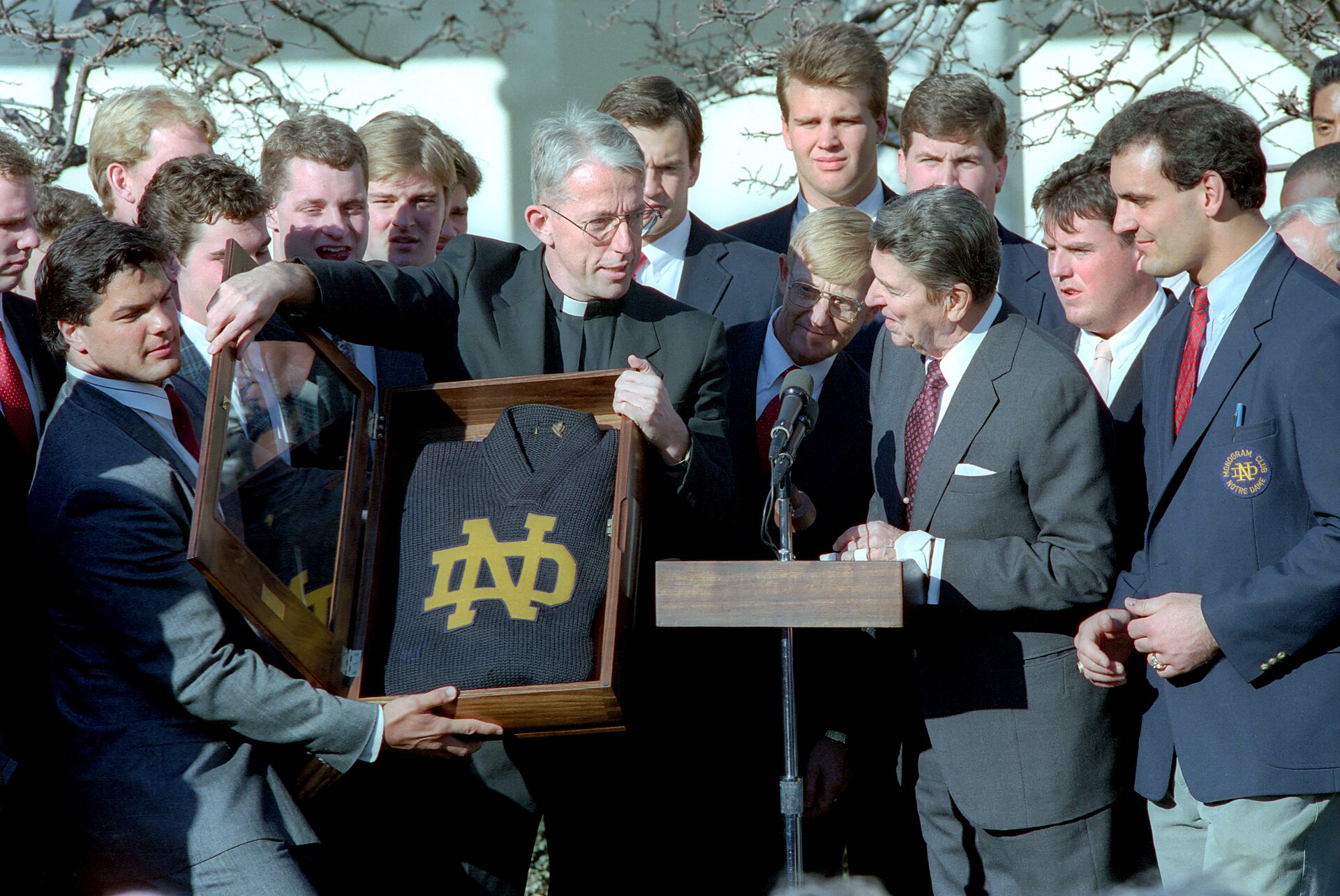
Holtz portrait: U.S. Navy photo by Mass Communication Specialist 2nd Class Jordon Beesley, public domain, via Wikimedia Commons ↗. White House photograph: Reagan White House Photographic Collection, public domain, via Wikimedia Commons ↗. Monument photograph: Matthew Owen.
The hottest period was brief, but it changed how an entire era is remembered.
No. 5 Notre Dame travels south and wins 14–0 in the first meeting between the programs.
A regular home-and-home series develops. Miami's rise culminates in a 58–7 victory in the final game of Gerry Faust's Notre Dame tenure.
Miami wins the 1987 national title, then carries its No. 1 ranking and 36-game regular-season streak into South Bend the following October.
Miami wins the 1989 rematch on its way to the title. Notre Dame closes the annual series in 1990 with a 29–20 home victory.
Notre Dame wins the 2010 Sun Bowl and later meetings in 2012 and 2016. Miami responds emphatically in 2017 and wins 27–24 in 2025.
Miami returns to Notre Dame Stadium on November 7 for a nationally televised prime-time game.
The provocative phrase came from a student-made T-shirt, not from either university. It captured the media stereotypes surrounding the 1988 game, but it also unfairly reduced Miami's players to a demeaning label. The documentary examines how the shirt was created and why its legacy remains complicated. The football deserves to be remembered without treating that caricature as an official identity.