Football arrives in South Bend
Michigan wins 8–0 in Notre Dame’s first varsity game. The visitors’ instruction helps establish the sport on campus.
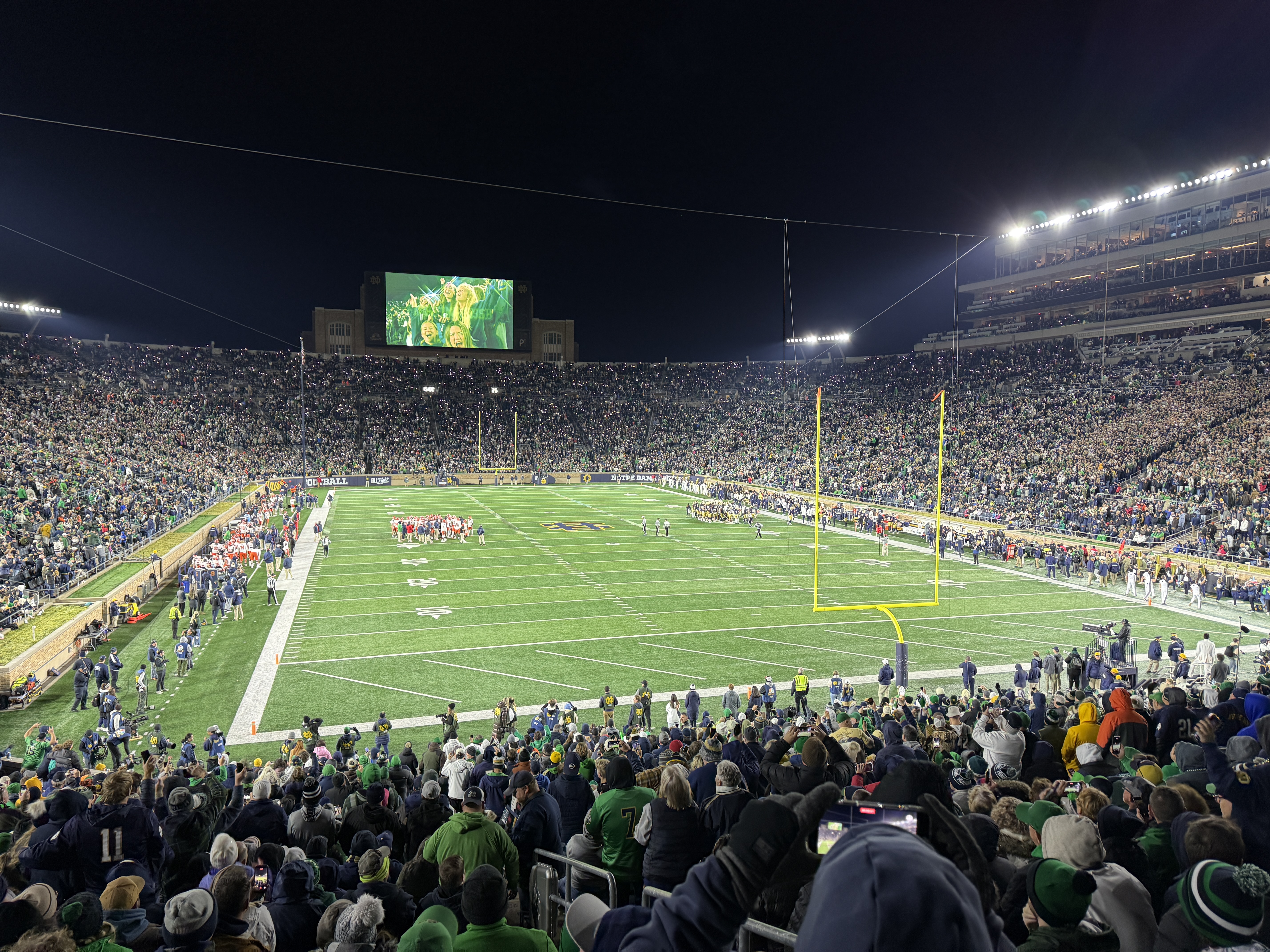
Two blue-and-gold programs, a shared origin story, long interruptions, and a modern series famous for ranked teams and narrow finishes.
Notre Dame football begins with Michigan. Wolverines players traveled to South Bend in 1887, introduced the game, and won the first contest 8–0.
Michigan won the first eight meetings before Notre Dame broke through in 1909. The series then disappeared for decades, briefly returned during World War II, and did not become a regular national event until 1978. That unusual rhythm—intense bursts separated by long pauses—is part of what makes the rivalry distinctive.
In the modern era, the matchup repeatedly brought together ranked teams and programs measuring themselves against the same historic standard. Many games turned on a late kick, final possession, or a single defensive stop.
The series is older than Notre Dame Stadium and has repeatedly reintroduced itself to new generations.
Michigan wins 8–0 in Notre Dame’s first varsity game. The visitors’ instruction helps establish the sport on campus.
Notre Dame wins 11–3 in Ann Arbor, ending Michigan’s eight-game series winning streak. The teams then do not meet again for 33 years.
Michigan wins in South Bend in 1942; top-ranked Notre Dame answers with a 35–12 victory at Michigan the following year.
The programs renew the series after a 35-year absence, creating the familiar September showdown known by recent generations.
Close games, top rankings, Reggie Ho’s kicks, Raghib “Rocket” Ismail’s returns, the 1992 tie, and Notre Dame’s upset of No. 3 Michigan in 1993 make this a defining stretch.
Notre Dame opens its 2018 playoff season with a 24–17 home win. Michigan answers in the rain in Ann Arbor the next year.
Michigan is not merely a nearby power. It is woven into Notre Dame’s origin story, and its long gaps demonstrate how rivalries can remain culturally powerful even without an annual game.