The intersectional idea
Notre Dame wins 13–12 in Los Angeles, beginning a coast-to-coast series that immediately expands both programs’ national reach.
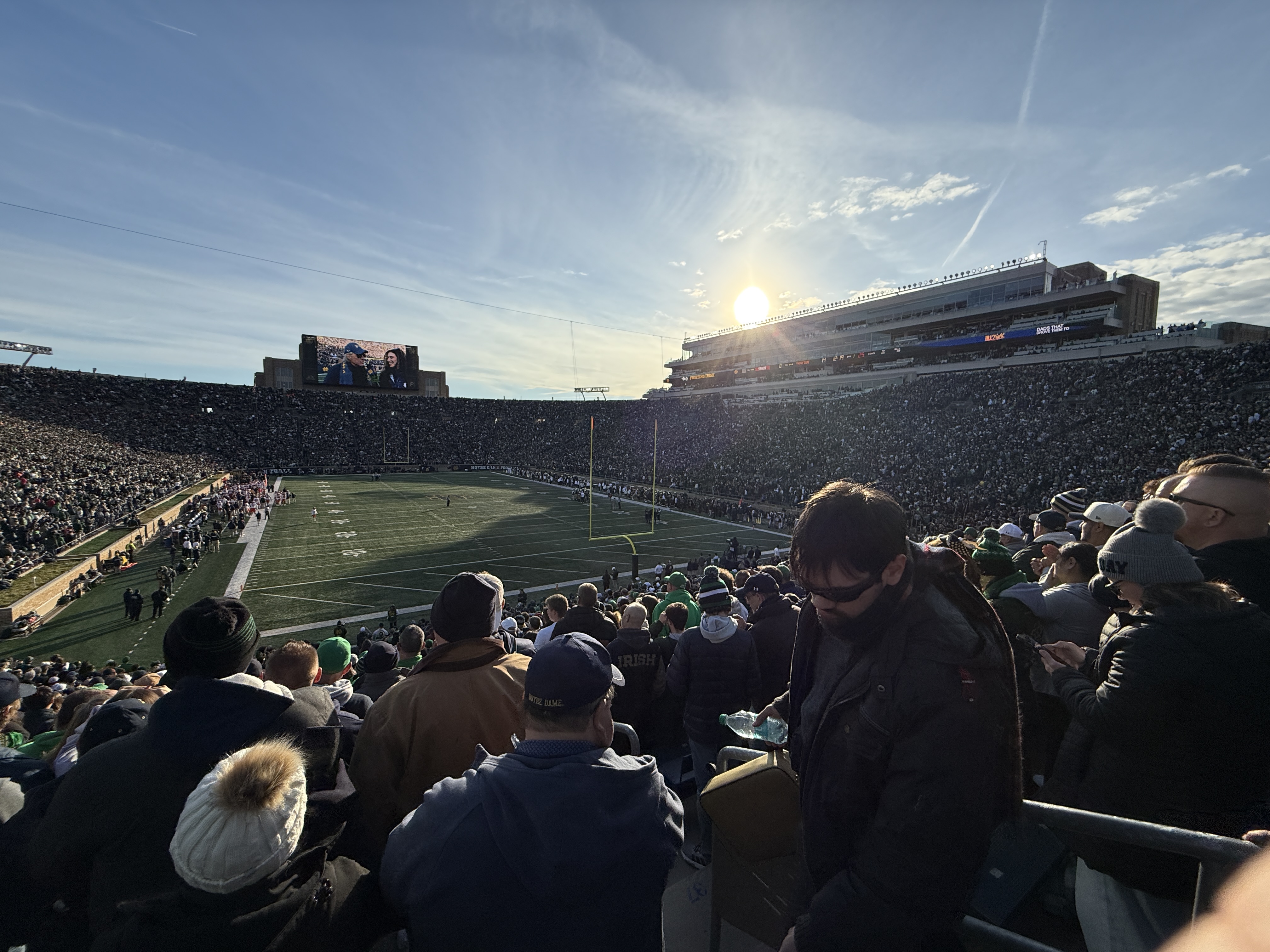
South Bend and Los Angeles, late autumn and California sun, two national programs, and a wooden trophy covered in precious stones.
Notre Dame–USC was built to be national. Knute Rockne took the Irish west in 1926, and the annual exchange soon connected two private universities on opposite sides of the country.
For nearly a century, the series has featured championship teams, Heisman winners, coaching legends, and games that redirected entire seasons. USC traditionally visits South Bend in October; Notre Dame heads to Los Angeles in late November.
The winner receives the Jeweled Shillelagh. Shamrocks mark Notre Dame victories, ruby Trojan heads mark USC wins, and each medallion records a score and year—a physical history of the rivalry.
Few rivalries have influenced more national championships—or brought together more recognizable eras.
Notre Dame wins 13–12 in Los Angeles, beginning a coast-to-coast series that immediately expands both programs’ national reach.
The Notre Dame Club of Los Angeles introduces the trophy. When the original runs out of space, a larger Irish-made replacement carries the record forward.
USC rallies from a 17-point halftime deficit to beat unbeaten, top-ranked Notre Dame 20–17 in the regular-season finale.
Notre Dame victories in 1973 and the famous green-jersey game of 1977 become milestones on national championship runs.
Notre Dame controls a full decade of the rivalry, the longest winning streak by either program in the series.
The 2005 “Bush Push” becomes an instant classic. Later Irish victories include a 49–14 statement in 2017 and a rain-soaked 34–24 win in 2025.
USC embodies Notre Dame’s choice to build a national schedule rather than a regional one. The yearly trip west helped create the far-reaching identity that still distinguishes the Irish.